
Weekly Writer's Reference
February 22nd to February 28th

by Micah E. Weiss
This Week in History
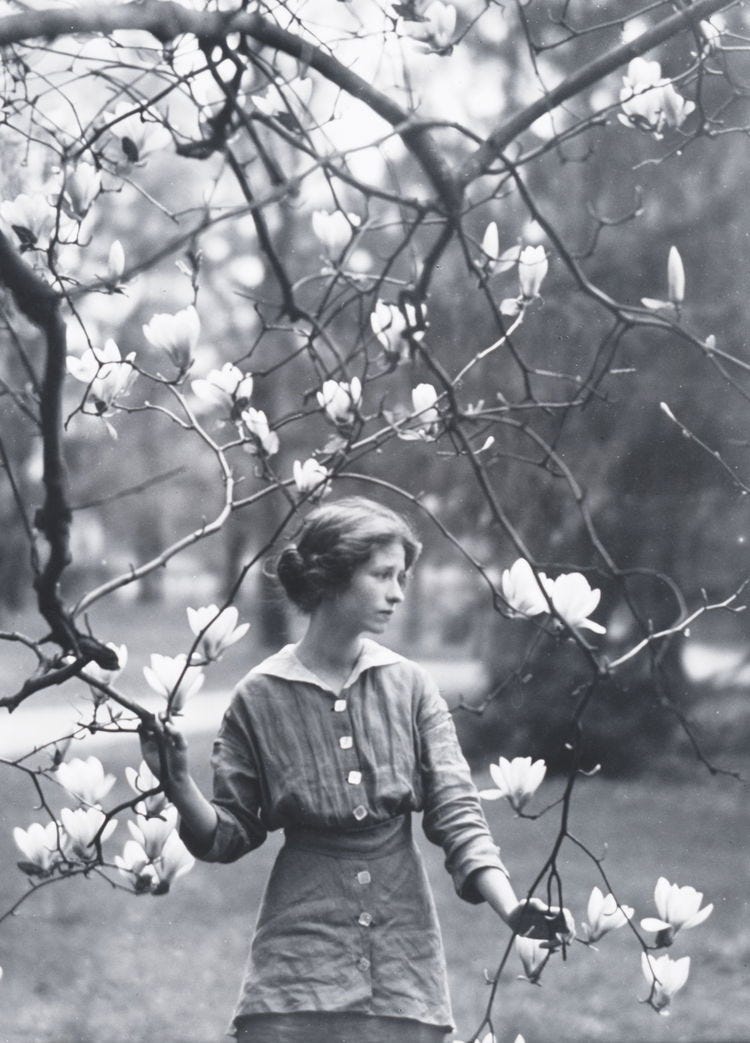
February 22nd is the birthday of poet Edna St. Vincent Millay. Born in Maine in 1892, Millay wrote in many genres, but is generally considered a lyric poet and a master of the Sonnet. To outline all the genres as I would normally do would detract from what is her true accomplishment, that she wrote about so many facets of life in so many different styles. Yes, she mainly stuck to the old familiar topics of poetry, sex, death, love, and nature, but it is extraordinary how she approached these topics from so many different perspectives over her career. She wrote lyric sonnets, but here with cynicism, there with idealism, with passion or resignation, now a satirist, and now with earnestness, with a search for virtue, or a non-conformity in values, as a woman, as a lover, as a propagandist, as a man, as a wife, and as a child, as a long-suffering mother. Millay seemed to never tire of finding new parts of life to explore, seeking out novelty, beauty, and beyond beauty, and inwardly hunting for every last corner of her soul.
To this day, Millay’s private life has often been made into that of an exemplar of feminist liberation, something she actively sought and would not displease her. As a young woman, she threw herself into everything with as much energy as she could muster and more, leading to several nervous breakdowns over the course of her life. Her poem First Fig from the collection A Few Figs from Thistles (1920), is perhaps the most self-aware poem ever written, and one of my favorites (and so short I chose to print it here):
My candle burns at both ends;
    It will not last the night;
But ah, my foes, and oh, my friends—
    It gives a lovely light!
Millay turned down perhaps half a dozen offers of marriage, had torrid love affairs with men and women before and after her marriage, and never had children. Yet, here again, she saw the points of view, writing about the selflessness of motherhood in her 1923 collection The Harp-Weaver, and Other Poems. That book Millay dedicated to her mother, who had divorced Millay’s abusive and financially irresponsible father at a time when that was hardly normal.
Millay’s poetry fell out of favor in the late 1930s, as the lyric and romantic poetry of the 19th century went out of vogue, and the modernists crowded out the field–tough competition. However, Millay made her mark on American letters, and while not quite as well read today as she should be, she is by no means forgotten.
A note for our time: with the advent of hormonal birth control in the 1960s, a caricature of Millay’s early life has risen to prominence in the confused and often incoherent world of contemporary feminism. Hook-up culture, a Sex in the City lifestyle, and a general delaying of marriage and children till later in life in favor of careerism, have all been packaged as empowering for women in recent decades by thinkers, influencers, and even politicians, often at the expense and overt denigration of marriage and motherhood. This is certainly a subject of a much longer essay, but it’s one I don’t have to write, as writers Louise Perry and Mary Harrington have both articulated this position better than I ever could. Whatever one’s personal view of the matter, the results of this cultural trend have been poor. A plummeting birth rate, a reverse gender imbalance in academia and the entertainment industry, an anemic and overly feminized publishing industry, and a mental health crisis that disproportionately affects women, particularly middle class women, the most medicated population in history. And no, I do not think that Edna St. Vincent Millay should have lived her life differently, or that she should have settled down to live a modest life of maternal self-sacrifice like her mother–we are all richer for her choices. What I am suggesting is that most women aren’t Edna St. Vincent Millay, nor should they try to be. It’s clear that Millay was drawn to a life that was exceptional, but it’s high time we take the superlative out of that word “exceptional” and place it where it belongs, merely at the point of the graph marked “outlier.” Millay is no model for the average woman’s life, but there should be room enough in the world for her and the minority of women like her, without trying to make it the norm (Andrew Sullivan has made the same point vis-a-vis “queerness,” a term he, as a gay man, rejects). It should also be noted that pain and unhappiness seemed to always be with Millay, but that she was more concerned with asking questions of life than finding happy answers; the cost is plain to anyone who explores her biography. Millay was a poet in practice and in life, a romantic and a sensualist whose muse went beyond writing, particularly when she was young. In times past we had a term for people like that: it was called having an “artists’ temperament,” and while not every artist has one, and while many non-artists do, it’s rare–as one might imagine by thinking about it for more than a split second. A civilization isn’t built by artists, it cannot be maintained by artists, people cannot be fed by artists. However, civilizations at their best support artists and the creation of art: one flows from the other. And capital A Art is the only redemption of civilizations.
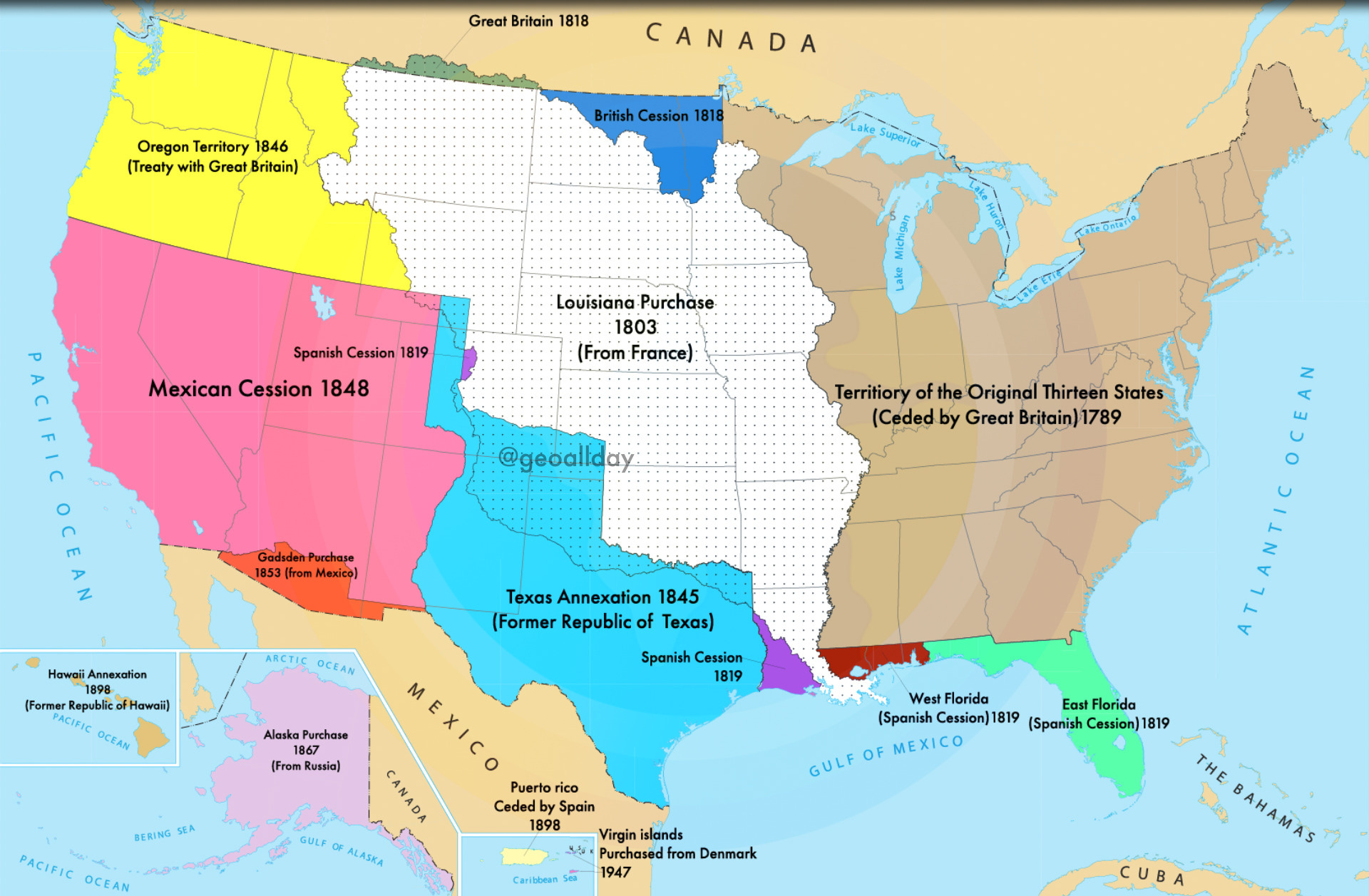
Also on February 22nd the United States acquired what is now the State of Florida in 1819. Known as the Adams–Onís Treaty, the deal was between the US and Spain, ruled at the time by King Ferdinand VII. American settlers had spent the years from the end of the Revolutionary War to 1810 moving into what was known as “West” Florida, everything on the coast west of the Pearl River to Louisiana. In 1810, after a brief three months where an unrecognized Republic of Florida declared itself, President Madison annexed the territory. East Florida was another concern, as the Seminole tribe essentially ran much of the territory outside the Spanish towns on the coastline. The Seminole were a motley band of displaced Indian Tribesmen and runaway slaves that had formed into something like its own culture over the previous hundred years. There were tit-for-tat raids along the border between Americans looking for slaves (escaped or otherwise) and Seminoles looking for goods and free captured Seminoles. They were quite adept at living in the deep jungles of the interior, emerging at will, and disappearing without a trace. These raids would cause the First Seminole War, fought by General Andrew Jackson who brought Creek Warriors with him to central Florida, eventually occupying Pensacola, albeit briefly, though it was the Spanish capital of the colony.
The Spaniards were more or less spectators to all these events, and while they voiced their objections, by the time the treaty was being negotiated, it was clear the Spanish had little power left in the region. Devastated by French occupation and the Peninsular War–a sub-category of the Napoleonic Wars–Spain was in a terrible state, and King Ferdinand was still trying to dig Spanish dignity out of the rubble years after Waterloo. As mentioned last week, the Spanish Empire’s decline was well under way, and many colonial uprisings and revolutions had been ongoing in Central and South America and the Caribbean since at least 1809.
Technically, the treaty wasn’t ratified till 1821, but both countries acted as if it was already in place. John Quincy Adams, Secretary of State at the time, negotiated the treaty with Luis de Onís, the Spanish Ambassador in Washington, hence the name, and the Senate ratified it unanimously. A final detail about the treaty, The United States had to give up a claim to Texas to get the deal done, which leads me to the final portion of our write-up this week:
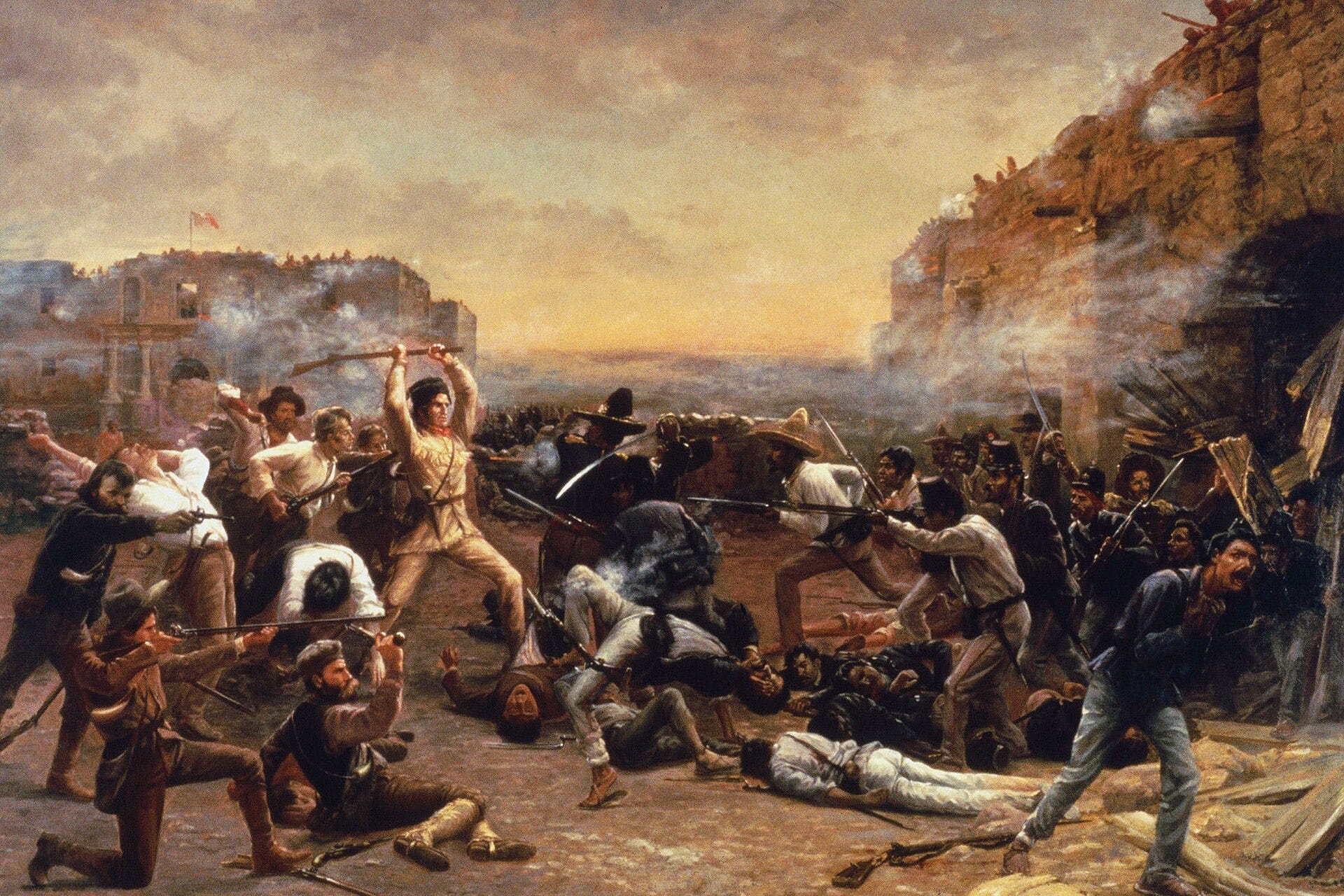
On February 23rd, the Battle of the Alamo began in 1836. This is the most remembered and celebrated of all the battles of the Texas Revolution, where Anglo-American settlers and Hispanic Texans, known as Texians and Tejanos respectively, joined forces to free Texas from Mexican rule. The Texas Revolution is often now framed as being related to slavery, and some of the Anglo-American settler’s desire to keep the slaves they brought with them when they settled in Texas, as Mexico had outlawed the practice. This is true to some extent. However, the cultural divide between the Anglo-Americans and the Mexicans was bound to get in the way of the relationship. Immigration alone made some kind of conflict inevitable. By the time the Revolution started, Texians outnumbered Tejanos ten to one. Add to that a Revolution in Mexico by Antonio López de Santa Anna who, in 1833, overthrew the eleven year old Mexican Republic (which had already suffered a coup d’etat in 1829), setting up a new pseudo-Republic under his rule that no one in Texas liked, and a revolution was born.
Santa Ana himself led the effort to quell the rebellion, and he seems to have been something of an arrogant jackass with a bloody turn of mind. In his own revolution in Mexico he’d allowed his men to pillage the city of Zacatecas for 48 hours like it was the 16th century, and he named himself The Napoleon of the West after a victory against a Spanish force riddled with Yellow Fever. In the Texas Revolution he was no better. Without getting too deep into the weeds of military history, the Alamo Mission in San Antonio de Béxar (now just San Antonio) held a strategically advantageous position, so Santa Ana laid siege to it with over 2000 men. The Texians and Tejanos inside numbered only 260 at most. When Santa Ana first arrived he set the tone by raising a red flag which indicated “No Quarter” to the men inside. Santa Ana’s feeling was that a decisive victory was needed to end the rebellion and that blood needed to be spilled for any victory to be decisive. He also knew the numbers and considered himself in a strong position.
Santa Ana did not know the character of the men defending the Alamo. Colonel Sam Bowie of the Texas Rangers was one. A true adventurer and all-around badass known for his prowess in brawling and knife fighting (the famous Bowie Knife is named for him, and was designed for his use by his brother), Bowie commanded a great deal of respect and authority. Bowie shared command with William Barret Travis, also a charismatic leader, and a lieutenant colonel in the Texian cavalry. Travis and Bowie were refused an “honorable surrender” by Santa Ana who offered only “unconditional surrender.” Travis and Bowie agreed to fight Santa Ana to the death, and during the siege, Travis wrote a famous letter:
To the People of Texas and All Americans in the World
Fellow citizens and compatriots;
I am besieged, by a thousand or more of the Mexicans under Santa Anna. I have sustained a continual Bombardment and cannonade for 24 hours and have not lost a man. The enemy has demanded a surrender at discretion, otherwise, the garrison are to be put to the sword, if the fort is taken. I have answered the demand with a cannon shot, and our flag still waves proudly from the walls. I shall never surrender or retreat. Then, I call on you in the name of Liberty, of patriotism and everything dear to the American character, to come to our aid, with all dispatch. The enemy is receiving reinforcements daily and will no doubt increase to three or four thousand in four or five days. If this call is neglected, I am determined to sustain myself as long as possible and die like a soldier who never forgets what is due to his own honor and that of his country. VICTORY or DEATH.
William Barret Travis
Lt. Col. Comdt.
P.S. The Lord is on our side. When the enemy appeared in sight we had not three bushels of corn. We have since found in deserted houses 80 or 90 bushels and got into the walls 20 or 30 head of Beeves.
Travis
A strange little post script, perhaps, taking a little power out of the otherwise inspiring missive that was spirited out of the Alamo and published in Texas, soon America, and even overseas. Travis read Snata Ana’s character correctly; far better than Santa Ana read the hearts and minds of the Texians. The Alamo fell on March 6th in a most terrible and bloody assault. Nearly every Texian was killed during the battle, and the Mexican soldiers made sure none survived, running amok as the battle ended, bayoneting anybody that moved and shooting into corpses; much was witnessed by several civilians who survived the battle, including the execution of between five and seven Texians who were allowed to surrender. Among the dead was Bowie (who had taken ill and was likely bayoneted while lying sick in bed), Travis, and Davy Crockett, famed frontiersmen and former US Congressman who had traveled to Texas to join the fight.
The cost of Santa Ana’s victory was high for the Mexican Army. Though the numbers are disputed, the Texians did not sell their lives cheaply. Santa Ana lost between 400 and 600 men, a quarter of the force he arrived with, which despite the complete annihilation of the Texian force, is considered a horrifying casualty rate. Santa Ana thought he had won a great victory, that the little rebellion was easily put down, and that he was merely mopping up the stragglers right up to the point when he was attacked by Sam Huston’s Texas Army at the battle of San Jacinto a month later. That Texan Army had formed quickly in response to what happened at the Alamo (Travis’ letter was part of that inspiration). The battle of San Jacinto was more of a surprise attack and the Texians showed as little mercy to the Mexican Army as they had shown to the Texians at the Alamo. Nearly half of Santa Ana’s 1360 men were killed, many running away into a marsh, and hundreds more were wounded in what was a bloody rout. That battle fairly ended the war and secured Texas’ independence. It also ended Santa Ana’s claim of being the Napoleon of the West.
Texas wanted to become a part of the US, but to keep the peace with Mexico, the US didn’t annex the massive Republic of Texas for almost a decade.
Which brings me to a recent comment by a certain talented musician who, like most musicians, should never be allowed to speak. She claimed that the United States was on stolen land. Please don’t misunderstand, as I’ve written about extensively, the people who lived here before colonization have gotten a bad deal, and their communities are still in terrible shape relative to every other ethnic group in our country that a demographer could subdivide. The suffering of living American Indians is something that I think is a grave injustice, and there should be an attempt on the part of our government and people to right those myriad injustices beyond reservation casino licenses. However, words have meaning, history matters, and slogans are usually pretty stupid. As with “Remember the Maine” or “Remember the Alamo,” slogans should be relegated to and understood as effective war propaganda, and never confused for history or public policy. So, with that in mind, no one that I know of in the public discourse has bothered to point out, or perhaps even noticed, that when the United States was formed, every inch of territory of the continental United States had already been stolen, conquered, or claimed by some European power. The British Empire ceded all lands north of East and West Florida, and East of the Mississippi and south of modern-day Canada to the newly formed US Government and its people by treaty in 1789. The Louisiana Purchase was exactly that, a purchase made in 1803 from Napoleon’s nascent empire. Napoleon, of course, had stolen the French Government in a coup, so the land, technically, was claimed by a Bourbon monarchy that no longer existed–so the land’s ownership was already in a tenuous and disputed (by Spain) condition. As written above, Spain ceded ownership of the Floridas in 1819, land it had stolen/claimed/conquered hundreds of years earlier. The Mexicans stole Texas from the Spanish, and then the Texans stole it from the Mexicans before the US government annexed it in 1845. Likewise with much of what is now the Southwest including California, which the Mexicans lost to the United States in the treaty that ended the Mexican-American War in 1848 (a war where the Americans conquered literally all of Mexico, which in the treaty, they gave back to the Mexicans). The Gadsden Purchase of 1853 rounded out the Southwest’s current borders; once again, it was a purchase. And the Oregon territory was ceded to the US in 1846, also by treaty, ending the dispute of who would control it, as it had been stolen/claimed/conquered by both the British and the Russians who would sell Alaska to America in 1867. Hawaii is, perhaps, the only annexation of a current US state or territory that one might interpret as a theft, but it was more an internal political struggle against the Hawaiian monarchy (which itself had conquered only some of the Hawaiian Islands 50 years earlier from other tribes) that the US government took advantage of. But let’s grant that one, just for argument sake.
You’ll notice, in all other instances, the lands of the United States were either purchased or ceded by powers that either stole/claimed/conquered the land long before Americans were thinking of moving there. Yes there were people living there already, but they were usually fighting amongst themselves, pushing each other all over the territories as the history of the most famous and powerful of Indian tribal groups easily proves. Furthermore, just speaking as a matter of cultural understanding, the vast majority of tribal groups didn’t have the concept of private property in the Western sense at all, and all treaties with Indian tribal groups were somewhat contingent on the understanding–at least on the part of the Americans–that the United States already owned the land slated for Indian use as a baseline fact. These are important distinctions that are legal and historical, and if adults are ever going to reclaim the discourse from the buffoons who currently dominate, the words used to frame that discourse really do matter. The United States may be on stolen land, it certainly is on conquered land, but the men who stole/conquered it are centuries dead, and weren’t United States citizens or representatives of the United States government, or even in any way adjacent or related to it, because the United States of America did not exist.
Also This Week in History in Brief
February 22nd, 1980, was the day of the Miracle on Ice, when a group of scrappy college students that made up the US Hockey team defeated the a great Russian Olympic team of seasoned veterans. This is one of America’s great stories from the Olympics, and a reminder that the Olympics used to have a rule that only amateur athletes were allowed to compete for most of modern Olympic history.
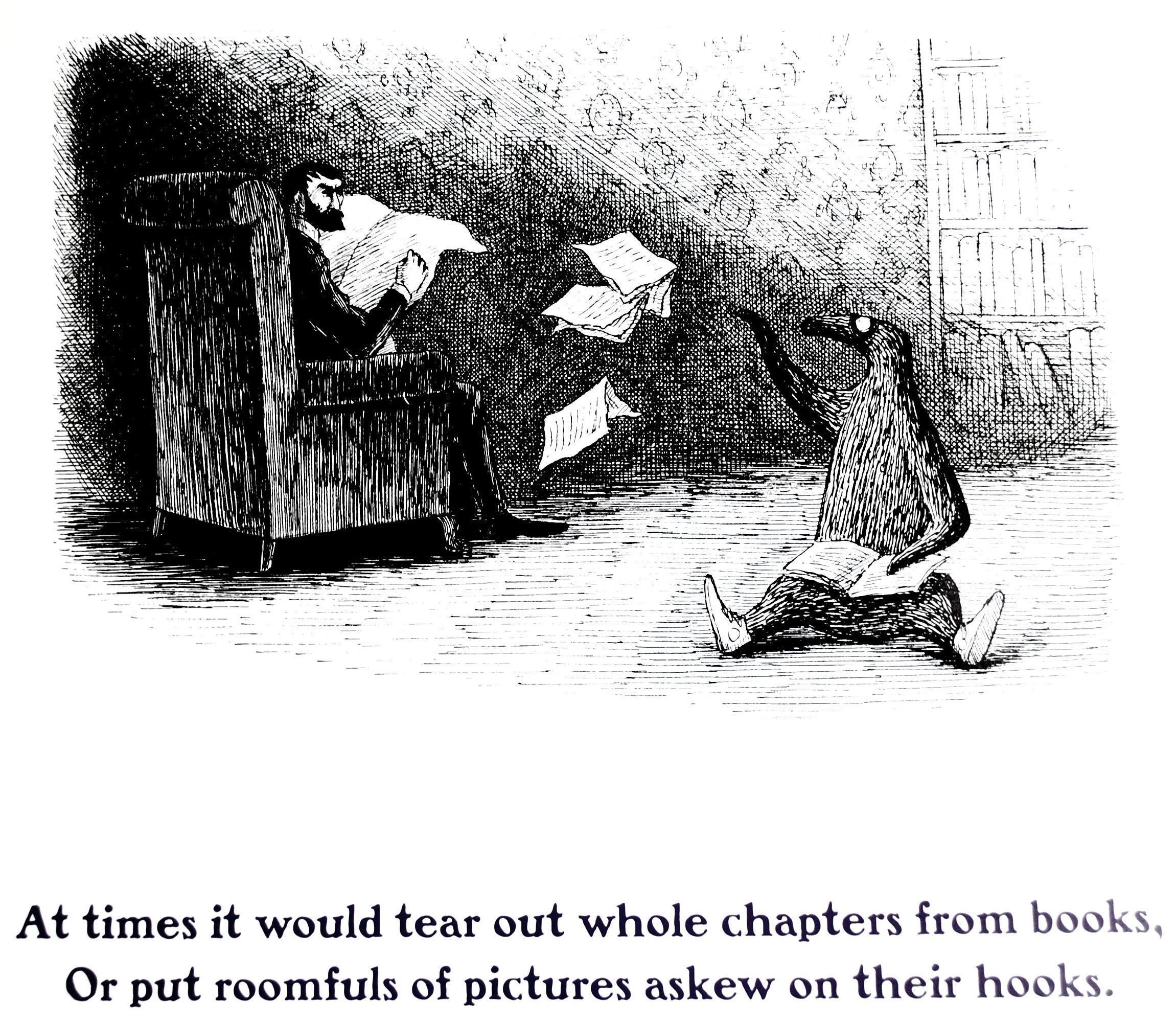
In 1925, also on the 22nd, artist and illustrator Edward Gorey was born. I’ll have a longer write-up on him hopefully next year, as he is just an amazing artist and humorist. He is best known for the animation at the start of PBS’ series Mystery that ran for decades. Like many, I knew about that animation long before I knew Gorey’s name, but I was excited to be introduced to his macabre and hilarious little picture books.
The 22nd is also George Washington’s birthday. Too much to say and so little time–if I start to even give an abridged reading of his life I’ll get carried away, so instead, just the promise: more next year.
On February 23rd, 1868, W. E. B. Du Bois was born. I’ve written quite a bit about the Harlem Renaissance recently, so I punted on Du Bois this week. Du Bois was the intellectual heart of the New Negro movement that informed the Harlem Renaissance. A true genius at articulating what he hoped would be the rise of black Americans into mainstream public life, he is worth reading at length.
On February 24th, 1582, Pope Gregory XIII issued the papal bull Inter gravissimas, introducing the new calendar that we are still, more or less, using to this day. Thanks to Galileo and others, the math of the movement of the spheres, including Earth, had revealed several counting discrepancies that Julius Caesar’s calendar had created, including a 10-day drift that had taken over a millennia and a half to reach that length. I should note that I have a hard time with dates when choosing what to write as Eastern Europeans who follow Eastern Orthodoxy often use the old calendar to mark important dates. The calendar change also makes writing about events that precede that change quite uncertain. In case you were wondering, I generally err on the side of the new calendar where I can.
And on February 25th, 1836, Samuel Colt patented the first revolver. The revolving drum which gave the Colt Paterson and all subsequent revolvers the name, enabled for the first time one man to fire multiple shots with a side-arm. This led to one of my favorite expressions, an adage of unknown origin: “God made man, but Samuel Colt made them equal.”
Poem of the Week
The Ballad of the Harp-Weaver
by Edna St. Vincent Millay
“Son,” said my mother,
   When I was knee-high,
“You’ve need of clothes to cover you,
   And not a rag have I.

“There’s nothing in the house
   To make a boy breeches,
Nor shears to cut a cloth with
   Nor thread to take stitches.

“There’s nothing in the house
   But a loaf-end of rye,
And a harp with a woman’s head
   Nobody will buy,”
   And she began to cry.

That was in the early fall.
   When came the late fall,
“Son,” she said, “the sight of you
   Makes your mother’s blood crawl,—

“Little skinny shoulder-blades
   Sticking through your clothes!
And where you’ll get a jacket from
   God above knows.

“It’s lucky for me, lad,
   Your daddy’s in the ground,
And can’t see the way I let
   His son go around!”
   And she made a queer sound.

That was in the late fall.
   When the winter came,
I’d not a pair of breeches
   Nor a shirt to my name.

I couldn’t go to school,
   Or out of doors to play.
And all the other little boys
   Passed our way.

“Son,” said my mother,
   “Come, climb into my lap,
And I’ll chafe your little bones
   While you take a nap.”

And, oh, but we were silly
   For half an hour or more,
Me with my long legs
   Dragging on the floor,

A-rock-rock-rocking
   To a mother-goose rhyme!
Oh, but we were happy
   For half an hour’s time!

But there was I, a great boy,
   And what would folks say
To hear my mother singing me
   To sleep all day,
   In such a daft way?

Men say the winter
   Was bad that year;
Fuel was scarce,
   And food was dear.

A wind with a wolf’s head
   Howled about our door,
And we burned up the chairs
   And sat on the floor.

All that was left us
   Was a chair we couldn’t break,
And the harp with a woman’s head
   Nobody would take,
   For song or pity’s sake.

The night before Christmas
   I cried with the cold,
I cried myself to sleep
   Like a two-year-old.

And in the deep night
   I felt my mother rise,
And stare down upon me
   With love in her eyes.

I saw my mother sitting
   On the one good chair,
A light falling on her
   From I couldn’t tell where,

Looking nineteen,
   And not a day older,
And the harp with a woman’s head
   Leaned against her shoulder.

Her thin fingers, moving
   In the thin, tall strings,
Were weav-weav-weaving
   Wonderful things.

Many bright threads,
   From where I couldn’t see,
Were running through the harp-strings
  Rapidly,

And gold threads whistling
   Through my mother’s hand.
I saw the web grow,
   And the pattern expand.

She wove a child’s jacket,
   And when it was done
She laid it on the floor
   And wove another one.

She wove a red cloak
   So regal to see,
“She’s made it for a king’s son,”
   I said, “and not for me.”
   But I knew it was for me.

She wove a pair of breeches
   Quicker than that!
She wove a pair of boots
   And a little cocked hat.

She wove a pair of mittens,
   She wove a little blouse,
She wove all night
   In the still, cold house.

She sang as she worked,
   And the harp-strings spoke;
Her voice never faltered,
   And the thread never broke.
   And when I awoke,—

There sat my mother
   With the harp against her shoulder
Looking nineteen
   And not a day older,

A smile about her lips,
   And a light about her head,
And her hands in the harp-strings
   Frozen dead.

And piled up beside her
   And toppling to the skies,
Were the clothes of a king’s son,
   Just my size.

1922